PTV Islamabad Records RMNP President Ehsan Ahmed Sehar’s Interview for Independence Day Documentary
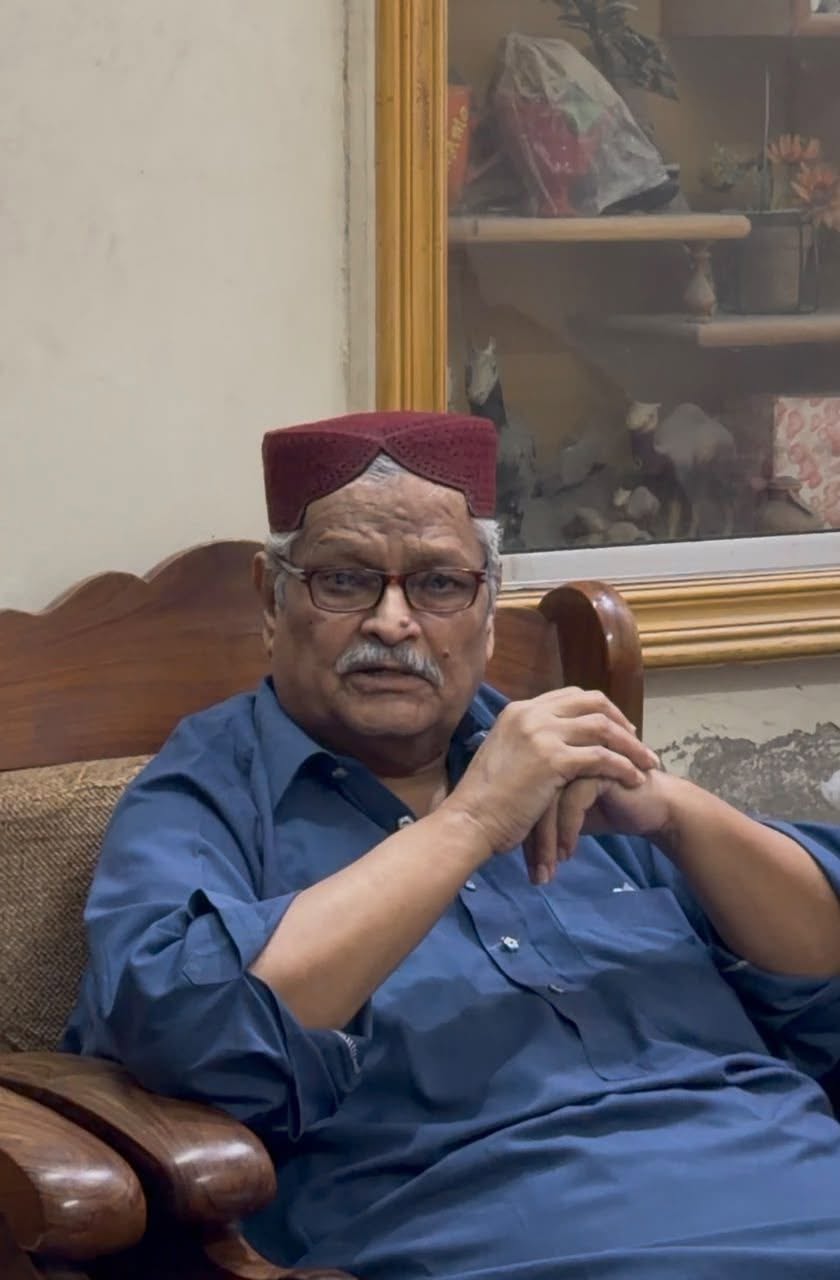
A Pakistan Television (PTV) Islamabad team led by Current Affairs Producer Asad Mehdi Sial recorded a 45-minute interview with Rural Media Network Pakistan (RMNP) President Ehsan Ahmed Sehar for a documentary being jointly produced by Inter-Services Public Relations (ISPR) and Pakistan Television (PTV). Scheduled for broadcast on 14 August 2026 to mark Pakistan’s Independence Day, the documentary explores Pakistan’s political and media evolution. During the interview, Ehsan Ahmed Sehar highlighted the deepening crisis facing Pakistan’s mainstream media, the exploitation of district correspondents, the urban bias of news coverage and the urgent need for reforms to safeguard field reporters.
Discussion Focuses on Pakistan’s Media Landscape
A Pakistan Television (PTV) Islamabad team headed by Current Affairs Producer Asad Mehdi Sial visited the residence of Rural Media Network Pakistan (RMNP) President Ehsan Ahmed Sehar and recorded an interview lasting more than 45 minutes for a documentary being jointly produced by Inter-Services Public Relations (ISPR) and Pakistan Television (PTV).
The documentary is scheduled to be aired on 14 August 2026 as part of Pakistan Television’s special Independence Day transmission.
During the interview, Asad Mehdi Sial sought Ehsan Ahmed Sehar’s views on the performance and public standing of successive governments from the era of the late Zulfikar Ali Bhutto to the present, the evolution of Pakistan’s print, electronic and digital media, and the changing role of field reporters in the country’s news industry.
Drawing on more than five decades of professional journalism, Ehsan Ahmed Sehar shared his assessment of the challenges confronting Pakistan’s media sector, particularly the difficulties faced by newspapers, television channels and rural journalists.
PTV Producer Calls for End to Exploitation of Field Reporters
Discussing the working conditions of field reporters, Asad Mehdi Sial requested Ehsan Ahmed Sehar to publicly advocate that private television channels should discontinue the practice of demanding money from district correspondents and field reporters at the time of their appointments and for the broadcast of their news reports and tickers.
Responding to the request, Ehsan Ahmed Sehar described the practice as one of the most serious professional and ethical issues confronting Pakistan’s media industry.
He observed that approximately 99 percent of district and rural correspondents receive no regular salaries. Instead of being compensated for their professional services, many are compelled to pay newspaper managements and private television channels merely to retain their positions or to ensure that their reports and news tickers are published or aired.
He said this exploitative system undermines professional journalism, discourages talented young journalists from entering the profession and weakens news gathering from rural Pakistan. He urged media owners to abolish such practices and introduce transparent recruitment policies while ensuring that journalists receive fair remuneration for their work.
Ehsan Ahmed Sehar Highlights Deepening Crisis in Pakistan’s Mainstream Media
Replying to questions from Asad Mehdi Sial, Ehsan Ahmed Sehar said Pakistan’s print media was passing through one of the most difficult periods in its history.
He remarked that the country’s print media was virtually “on its deathbed,” citing shrinking advertising revenues, declining newspaper circulation and severe financial pressures on media organisations.
He pointed out that one of Pakistan’s largest media groups had recently advertised the sale of office buildings in major cities, reflecting the seriousness of the financial crisis confronting the newspaper industry.
He further observed that private television channels had also experienced layoffs and cost-cutting measures, while both print and electronic media continued to struggle with declining commercial revenues.
Ehsan Ahmed Sehar added that the distribution of government advertisements remained unequal and influenced by favouritism, making survival increasingly difficult for independent and regional newspapers.
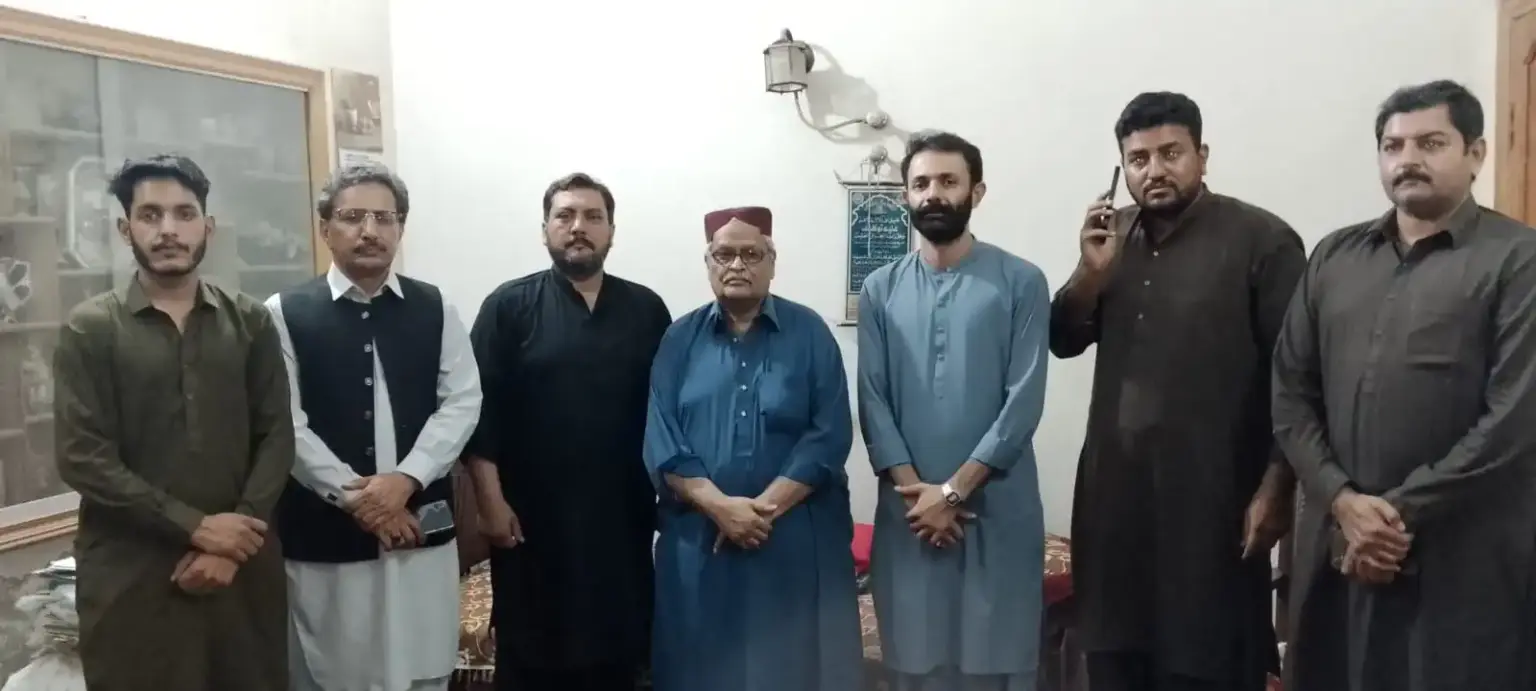
RMNP President Ehsan Ahmed Sehar with PTV Islamabad Current Affairs Producer Asad Mehdi Sial, members of the production team and guests after the interview recording.
Rural Journalists Continue to Shoulder the Burden of News Coverage
Ehsan Ahmed Sehar told Asad Mehdi Sial that Pakistan’s media continues to be overwhelmingly urban-oriented despite nearly 65 percent of the country’s population living in rural areas and small towns.
He explained that newspapers in major cities employ specialist reporters to cover politics, sports, crime, business, education, entertainment and other beats.
In contrast, a single rural correspondent is expected to perform all these responsibilities simultaneously while often bearing his own reporting expenses and, in many cases, paying monthly fees to newspaper managements or television channels.
He stressed that rural journalists remain the backbone of Pakistan’s news gathering system but receive the least institutional support despite serving the majority of the country’s population.
Ehsan Ahmed Sehar said meaningful media reforms would remain incomplete unless district correspondents and rural journalists were provided with fair employment conditions, financial security and professional recognition.
Coverage of General Zia-ul-Haq’s Plane Crash Recalled
The interview also revisited the 1988 air crash near Bahawalpur in which former President General Muhammad Zia-ul-Haq and several senior military officials lost their lives.
Ehsan Ahmed Sehar recalled covering the tragedy as Manager, Pakistan Press International (PPI), Bahawalpur Division. His reporting and related footage remain preserved in Pakistan Television’s archives, including footage showing a copy of the Holy Quran reportedly recovered intact from the crash site.
The discussion highlighted the historical significance of the tragedy and the challenges journalists faced while reporting one of Pakistan’s most important breaking news events.
Also present during the recording were Riaz Baloch, Member of the Federal Executive Council of the Pakistan Federal Union of Journalists (Dastoor Group), Abdullah Mukhtar , Pakistan Television’s Bahawalpur representative, and Dr. Muhammad Shakar, Associate Professor and Chairman of the Department of Educational Training at Islamia University Bahawalpur.
The interview reflected Rural Media Network Pakistan’s longstanding commitment to advocating for press freedom, equitable media policies, sustainable journalism and improved working conditions for district correspondents and rural journalists. Since its establishment in 2004, RMNP has pursued these objectives through research, professional training, policy advocacy and collaboration with national and international media organizations, consistently highlighting the structural challenges confronting Pakistan’s rural and regional media sector.