Senate Committee’s Directions Offer Hope, but Implementation Will Determine the Future of Media Freedom and Regional Newspapers
By Rural Media Network Pakistan (RMNP)
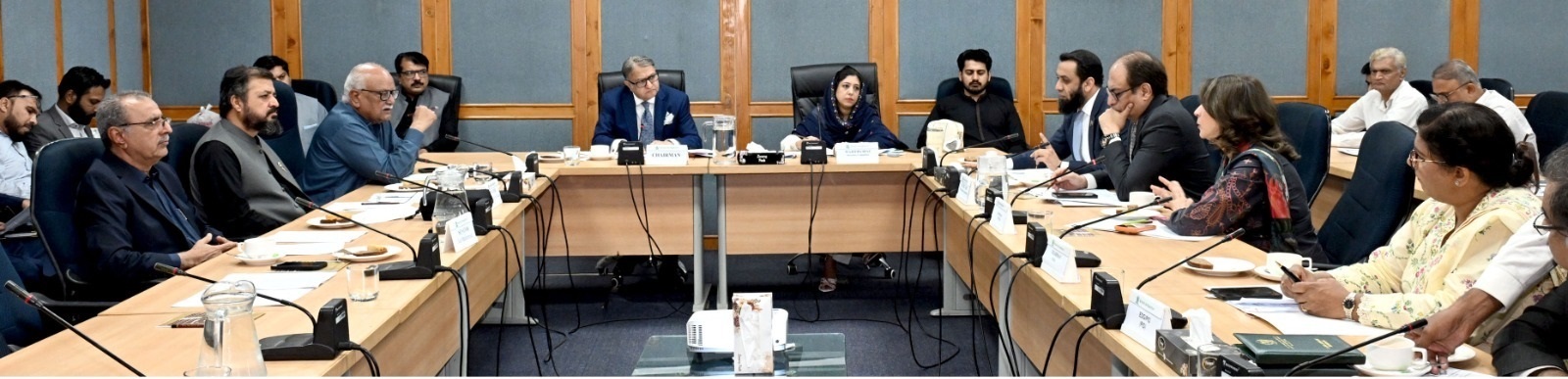
The deliberations of the Senate Standing Committee on Information and Broadcasting held in Islamabad under the chairmanship of Senator Sarmad Ali have generated cautious optimism among Pakistan’s media community. The committee’s recommendations touched upon several longstanding concerns, including the protection of media workers, support for regional newspapers, transparency in government advertising, institutional reforms, and the conduct of the National Cyber Crime Investigation Agency (NCCIA).
For Rural Media Network Pakistan (RMNP), these discussions are particularly significant because they address issues that regional and rural media organizations have repeatedly raised over the past two decades.
A Welcome Recognition of Regional Newspapers
Perhaps the most encouraging outcome of the meeting was the committee’s acknowledgment of the difficulties confronting regional newspapers.
Regional newspapers continue to perform an indispensable public service by reporting local governance, rural development, agriculture, education, health, and community affairs that seldom receive attention from national media outlets. Despite serving millions of citizens, many regional publications face shrinking advertising revenues, rising production costs, delayed government payments, and increasing competition from digital platforms.
The committee’s directive to formulate a comprehensive policy for the promotion and protection of regional newspapers is therefore a positive development.
However, policies alone will not resolve these challenges. The proposed Pakistan Information Department (PID) sub-committee must produce practical recommendations supported by measurable timelines and adequate financial commitments.
Government Advertising Requires Fair Implementation
The government’s emphasis on transparency in advertisement distribution and third-party verification reflects an effort to modernize the system.
Nevertheless, transparency must also ensure fairness.
Regional newspapers should not be disadvantaged simply because they operate in smaller markets or possess limited digital infrastructure. Evaluation criteria should recognize the public service role of local journalism rather than relying exclusively on web analytics or commercial indicators.
Government advertising has historically played a crucial role in sustaining public-interest journalism in underserved regions. A transparent and equitable allocation mechanism remains essential.
Protection of Media Workers Deserves Immediate Action
The committee rightly devoted considerable attention to the welfare of media employees.
Recommendations relating to regular salary payments, EOBI registration, life insurance, and compensation for families of deceased media workers reflect genuine concerns regarding employment conditions across Pakistan’s media industry.
These proposals deserve broad support.
However, implementation mechanisms will be equally important. Without effective monitoring and enforcement, salary delays, downsizing, and insecure employment may continue despite well-intentioned recommendations.
NCCIA and PECA: A Significant Parliamentary Intervention
One of the most important aspects of the committee meeting concerned the National Cyber Crime Investigation Agency (NCCIA).
Committee members questioned the agency regarding notices reportedly issued to newspapers and newspaper columnists and observed that such actions do not fall within NCCIA’s legal mandate.
The committee directed NCCIA to ensure that no action is taken against newspapers or their websites on matters outside its jurisdiction and sought comprehensive reports regarding PECA-related cases transferred from provincial authorities.
These observations carry considerable importance because concerns regarding the application of the Prevention of Electronic Crimes Act (PECA) have increased in recent years. Journalists, media organizations, and press freedom groups have repeatedly called for safeguards against the misuse of cybercrime legislation in ways that could discourage legitimate journalism.
Whether the committee’s directions result in changes on the ground remains uncertain.
Parliamentary committees exercise oversight and their recommendations carry significant institutional weight, but executive agencies are ultimately responsible for implementation. Sustainable improvement will therefore depend upon whether NCCIA modifies its operational practices and whether future investigations fully respect constitutional guarantees of freedom of expression and freedom of the press.
The Role of Senator Sarmad Ali
The committee’s proceedings attracted additional attention because they were chaired by Senator Sarmad Ali, a veteran newspaper executive and President of the All Pakistan Newspapers Society (APNS).
His extensive experience in Pakistan’s newspaper industry gives him a practical understanding of the economic challenges confronting print media as well as the pressures faced by journalists and publishers.
His leadership may help ensure that the concerns of mainstream and regional newspapers continue to receive parliamentary attention. Nevertheless, meaningful progress will depend upon consensus among government institutions and consistent implementation by the relevant ministries and agencies rather than the efforts of any individual alone.
RMNP’s Perspective
Rural Media Network Pakistan welcomes the Senate Standing Committee’s recognition of the importance of regional newspapers, media workers’ welfare, and responsible implementation of cybercrime laws.
The committee’s recommendations represent an encouraging step toward strengthening Pakistan’s media landscape.
At the same time, Pakistan’s media community has witnessed numerous recommendations over the years that were not fully implemented. Consequently, the true measure of success will not be the committee’s observations themselves but the concrete administrative, legislative, and institutional actions that follow.
RMNP believes that protecting regional journalism, ensuring the safety and welfare of media workers, and preventing the misuse of legal mechanisms against journalists are essential components of democratic governance and media freedom.
The organization will continue to monitor developments and advocate for the effective implementation of reforms that strengthen independent journalism throughout Pakistan, particularly in rural and underserved communities.
Author’s Note
Rural Media Network Pakistan (RMNP) has consistently advocated for the protection of press freedom, the sustainability of regional newspapers, and the rights and welfare of media workers. The organization welcomes the Senate Standing Committee’s recommendations and considers them a positive step toward addressing long-standing concerns of Pakistan’s media sector.
At the same time, RMNP believes that the effectiveness of these recommendations will ultimately be judged by their implementation. The organization will continue to monitor progress on the formulation of policies for regional newspapers, reforms in the government advertising system, the welfare of media workers, and the application of the Prevention of Electronic Crimes Act (PECA), particularly with regard to actions taken by the National Cyber Crime Investigation Agency (NCCIA).
RMNP will continue to engage with journalists, media organizations, policymakers, and relevant institutions to encourage reforms that strengthen independent journalism, protect freedom of expression, and ensure that regional and rural media receive fair recognition and institutional support.