
SC halts terror charges proceedings against Matiullah Jan, orders swift IHC review
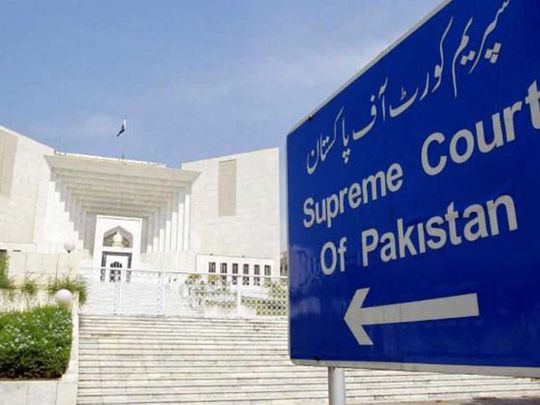
ISLAMABAD: The Supreme Court of Pakistan on Thursday restrained an anti-terrorism court from framing charges against veteran journalist Matiullah Jan and directed the Islamabad High Court to promptly decide on his challenge to the terrorism charges.
A three-judge bench headed by Muhammad Ali Mazhar heard the journalist’s plea seeking to overturn the high court’s February 23, 2026 order, which had refused interim relief and allowed the trial before the anti-terrorism court to proceed.
During the hearing, the prosecution raised no objection to the apex court issuing directions to the high court. The bench, however, clarified that it would not examine the merits of the case at this stage to avoid influencing the outcome.
Represented by Barrister Qadeer Janjua, the petitioner questioned the jurisdiction of the anti-terrorism court and the applicability of terrorism charges in the case. Filed under Article 185(3) of the Constitution, the petition argued that the high court erred in not granting interim relief, thereby allowing the trial to advance to the stage of framing charges.
Matiullah Jan was arrested on November 28, 2024, at a checkpoint in Islamabad’s Sector E-9. According to the FIR, he allegedly snatched a police weapon while intoxicated, threatened officers, and was found in possession of 10 grams of crystal methamphetamine.
The petition challenged these claims, stating that the high court’s order suffered from “patent illegality” as it failed to preserve the subject matter of the case. It argued that allowing the trial to proceed—especially to the point of framing charges—would render the pending revision petition ineffective.
It further maintained that the legal criteria for granting interim relief were met, citing a strong prima facie case, a favourable balance of convenience, and the risk of irreparable harm. The petition pointed out that even the trial court, while granting bail, had described the prosecution’s case as “full of doubts.”
Additionally, a forensic report by the Punjab Forensic Science Agency reportedly contradicted the narcotics allegation, confirming that the recovered substance was not crystal meth.
The petition also invoked the Supreme Court’s 2020 ruling in the Ghulam Hussain case, arguing that the allegations—taken at face value—do not meet the legal threshold for terrorism, which requires intent to spread fear or panic.
It stressed that forcing the journalist to face trial under the Anti-Terrorism Act, 1997, without clear jurisdiction would cause serious and irreparable harm, including violation of fundamental rights.
In its interim order, the Supreme Court paused further proceedings at the anti-terrorism court, effectively halting the framing of charges until the high court delivers its decision on the matter.