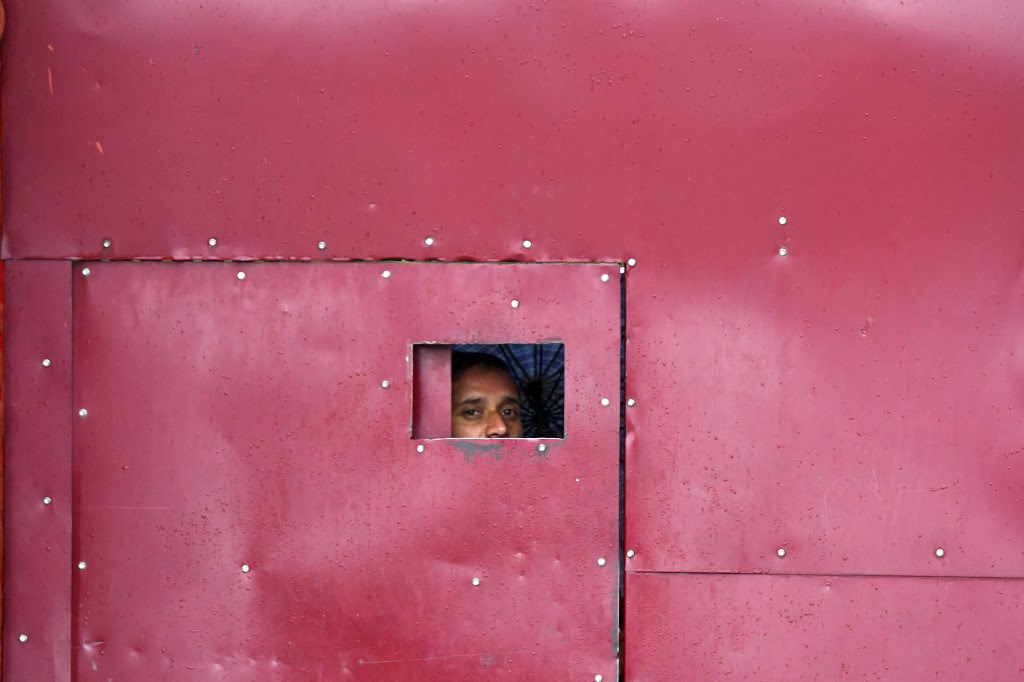
A worker looks through the gate of a closed school in Srinagar on August 19, 2019. – Some Kashmir schools re-opened on August 19 but many pupils stayed away, following weekend clashes after India stripped the region of its autonomy and imposed a lockdown two weeks ago. (Photo by PUNIT PARANJPE / AFP)
Brussels, 21st August 2019- The IFJ has called on the Modi government and authorities in Kashmir to lift the information siege imposed on the region as journalists continue to face harassment, obstruction and threats and media face a continued communications blackout, as the lockdown enters its third week.
IFJ affiliates across South Asia have called for urgent action to protect the rights of journalists and to end the gag on press freedom in Kashmir – which has faced an unprecedented lockdown since 5 August – with all communications including mobile and internet services blocked and media’s access to information having been curtailed.
Whilst information on the ground is hard to verify due to the communications blockade it is reported that:
· At least 1 journalist was detained. Two other reported detentions cannot be verified at this stage.
· Many media outlets have been forced to close because reporting has been impossible. Newspapers have stopped printing due to a shortage of newsprint and media workers have been prevented from operating freely
· Photographers and camera crew have had to face intimidation and have had photos deleted by security forces
· Journalists have faced physical and mental harassment while reporting
· Reporters are being denied access to large parts of the region or being prevented from moving due to an unofficial curfew
Journalists claim they are facing constant surveillance
In order to try to circumvent the restrictions some journalists have resorted to sending information out with those leaving the region on flash drives. The BBC has increased its short-wave radio broadcasts to make up for the block on its web-based news services.
Local journalists have had to wait painstakingly for hours to send their reports from the Kashmir Media Centre, set up by the government, which has just four computers, poor internet connection and two landlines. Many are angered over the reportage by the national media, which has been provided extra facilities by the authorities in Delhi and Kashmir and which they claim has not been showing the true picture on the ground.
IFJ affiliates across the world have reacted to the crackdown, demanding the authorities lift the restrictions.
IFJ General Secretary Anthony Bellanger said: “Journalists in Kashmir are facingrestrictions, obstruction and harassment, there is a constant flow ofmisinformation from the authorities, communications remain shut down and media cannot operate. The authorities must lift the information siege, allow journalists to carry out their duty and take action against those who unlawfully obstruct or harass journalists”.
ISLAMABAD: The Supreme Court allowed the management of the Jang Group on Tuesday to submit additional replies to a contempt notice issued to the management of the group over a…
KARACHI — An anti-terrorism court on Tuesday sentenced journalist Nasrullah Chaudhry to five years rigorous imprisonment for possessing literature against the state and spreading religious hatred. The court found the…
ISLAMABAD: In a landmark verdict, the Pakistan Information Commission has directed the Supreme Court of Pakistan to share information with the applicant that he demanded by using Right to Information…
The Council of Pakistan Newspaper Editors has condemned a raid by Rangers on the house of Saeed Khawar, Resident Editor of Nawa-i-Waqt. According to a statement issued by the CPNE…
ISLAMABAD: The spokesman of Pakistan Electronic Media Regulatory Authority (PEMRA) has termed today’s (May 20) meeting of its private members and their decisions as illegal. The PEMRA spokesman’s clarification in…
The Lahore Press Club (LPC) body has demanded the government ensure special look after of senior journalist, Shahid Ali Farrukh, who has been admitted to the Punjab Kidney and Liver…