The Workers and Owners of Journalism: Apathy and Indifference
When a Lifetime of Devotion to the Pen Is Valued at Just a Few Hundred Thousand Rupees
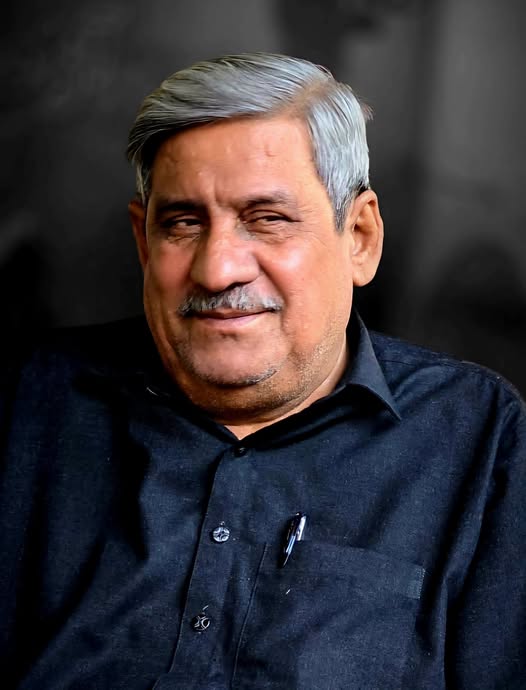
By Saeed Khawar
Journalism in Pakistan was never merely a profession. It was a commitment, a mission, and a lamp that thousands of journalists kept burning by sacrificing their youth, sleep and precious years of their lives. Today, however, journalism is increasingly becoming a ruthless marketplace for its own builders, where decades of dedication are valued at only a few hundred thousand rupees and loyalty is rewarded with sudden dismissal.
This tragedy is not limited to any one journalist or media organization. It is a story of the collective decline of Pakistan’s media industry, where newspaper pages continue to be printed and television channels remain on air, while the stoves in the homes of the workers who helped build and sustain these institutions are gradually going cold.
The End of a Lifetime of Service
My own journalistic journey is also a chapter in this bitter reality. I spent 28 years associated with the Nawa-i-Waqt Group. From August 24, 2005, to January 2017, I served as Editor of Nawa-i-Waqt Karachi. From 1992 to 2017, I served as Bureau Chief of the weekly Family Magazine Karachi, and from 2007 to 2011, I was Bureau Chief of Waqt News. Before and during these assignments, I continued to perform responsibilities in various fields of journalism.
In January 2017, my association with the Nawa-i-Waqt Group came to an end. According to my account, after 36 years of association and nearly 12 years serving as an editor, I was given only Rs900,000 and asked to leave, whereas according to my calculations, my minimum outstanding dues amounted to approximately Rs12.5 million. The matter has been pending for the past nine years before the Wage Board Award Implementation Commission.
The issue is not merely about money. The question is whether, after a journalist has spent several decades serving an institution, there is no value left for that lifetime of association. Is it not the responsibility of management to consider the rights, dignity and future of a worker who contributed to building the institution when parting ways with him?
The dismissal of hundreds of workers from Nawa-i-Waqt and 92 News, like my own experience, has personally saddened me. These were people with whom I worked for years, shared their joys and sorrows, and whom I regarded like my own children. Their unemployment is not merely a statistic. It means uncertainty in their homes, difficulties in paying children’s school fees, obtaining medical treatment and meeting everyday expenses.
92 News: Another Bitter Chapter
Following my dismissal from the 92 Media Group on January 1, 2025, my life entered another crisis. I suffered severe mental stress and illness. According to my own memory and records, I served as Editor of 92 News from January 2017 until December 31, 2024.
During this period, I was also assigned certain additional responsibilities. Following the departure of 92 News HD Plus Bureau Chief Rehan Hashmi, I state that I performed the duties of Acting Bureau Chief for approximately five years. Similarly, I played a key role in the launch and editorial management of the 92 Media Group’s English-language newspaper, Balochistan Times. According to me, the additional salaries and dues promised for these additional responsibilities remain disputed and unsettled. During those eight years, I also resolved numerous matters involving the industrialist owners, but I received not a single penny in compensation for this work.
I also wrote letters to the group’s Chairman and Chief Executive Officer seeking payment for my additional professional responsibilities, but no effective progress was made on them.
This is not merely a personal financial dispute. It raises the question of whether additional work performed by a journalist beyond his assigned responsibilities should have a financial value. And when written agreements, verbal assurances and actual responsibilities within an institution contradict one another, who gets access to justice?
Owners’ Attitude and the Exploitation of Workers
In some Pakistani media organizations, the relationship between owners and workers has become a contradiction that cannot simply be ignored. On one hand, the media is described as a guardian of democracy, freedom of expression and public rights. On the other hand, journalists working within these very institutions often struggle to secure their basic rights.
In my view, whether traditional newspaper owners or investors who entered the media sector for other reasons, for many owners media has become a business instrument. Some people establish media organizations to expand their other business interests and influence, while the rights of the journalists and workers who laid the foundations of these institutions are given secondary importance.
This cannot be said equally about every media owner. However, where workers’ salaries are withheld, dues remain pending for years, employees are dismissed without proper notice or legal rights, and management is not held accountable, questions about the ethical credibility of the media naturally arise.
Journalism demands accountability from others. Why, then, should media owners consider themselves beyond accountability?
Institutions May Close, But Dreams Do Not
I also have my own observations and information regarding the decline of the 92 Media Group. According to me, during 2023 and 2024, newspaper publications were discontinued in some cities, a number of workers were dismissed, and printing arrangements were changed at certain locations.
I also believe that the crisis facing media organizations cannot simply be attributed to financial difficulties. Management decisions, business strategy, editorial standards, treatment of workers and financial transparency all contribute to determining the future of an institution.
To say that the decline of an institution occurred solely because of one person or one political association would require reliable financial, administrative and documentary evidence. However, the question can certainly be raised as to why institutions that once recruited workers on a large scale, published newspapers from numerous cities and established a name in journalism could not provide security for the future of their employees. Are institutions merely the business plans of their owners, or do they also contain the dreams of the thousands of people who work in them?
Does the Worker of Journalism Have No One to Stand Up for Him?
Pakistan has laws, press clubs, unions and various organizations for the protection of journalists’ rights. Despite this, many workers are left alone to deal with issues involving their dues, job security and dignity.
When a journalist is dismissed from his organization, it is not merely a job that comes to an end. His children’s education, house rent, medical needs, social standing and future planning are all affected.
An unemployed journalist is often advised to find another profession. Those giving such advice may forget that for someone who has spent his entire life connected with the pen, suddenly changing professions is not easy. This is especially true when he has devoted his youth to building an institution.
Since January 1, 2025, I have been going through such a difficult period in my life. Unemployment, illness, bereavement and social isolation have left me deeply distressed. During this period, I also realized how helpless and alone journalists can be despite the grand claims made about journalism.
Outstanding Dues Are Not Merely Money; They Are a Matter of Justice
The issue of my dues from Nawa-i-Waqt and 92 News remains an unresolved question for me. I have records of the services I performed. I also have my recollections, letters, testimonies and other records concerning the additional responsibilities and payment commitments that I have mentioned.
I do not believe in declaring anyone guilty before a court. However, I certainly believe that when a worker claims that an institution owes him outstanding dues, the claim should be taken seriously. The worker deserves an answer, an account and justice.
My demand is not revenge; it is my right.
My complaint is not limited to a particular amount of money. It is against an attitude in which decades of a journalist’s work can be brought to an end by a file, a signature or a sudden decision.
My Questions to Media Owners
My questions to media owners are:
Have you ever thought about where the journalists who took your institutions to the heights of success are today and what condition they are in?
Have you ever asked about the circumstances of the families of workers who were suddenly dismissed?
Have you ever calculated what 20, 30 or 36 years of a journalist’s service are worth?
Have you ever thought about which door workers in an institution that publishes stories about the rights of others should knock on when seeking their own rights?
And are you prepared to acknowledge that journalism is not merely a combination of a television channel, newspaper, building, machinery and business name, but is built on the work, sacrifice and trust of human beings?
The Pen Is Still Alive
I have placed the matter of my outstanding dues and the injustices I believe I have suffered before Almighty Allah and His Holy Prophet Muhammad (peace and blessings be upon him). This difficult period of my life has taught me that sometimes a person has to place his hopes not in the world around him, but solely in his Lord.
But this does not mean that journalists should remain silent. Nor does it mean that owners should be beyond accountability, or that institutions should continue violating workers’ rights.
The true dignity of journalism will only be restored when journalists receive the same respect, protection and justice that they demand for other sections of society.
Several decades of my life have passed in the service of the pen. I helped build institutions, nurtured journalism with my blood and sweat, prepared pages, wrote news stories, exposed the contradictions of society, edited editorials and worked with generations of journalists. If I speak about my rights today, I am not doing so only for myself.
I speak for all those journalists who were suddenly rendered unemployed after years of hard work.
I speak for those workers whose dues remain buried in files.
I speak for those unfortunate families who were pushed into economic darkness after their fathers, brothers or husbands lost their jobs.
And I speak for the journalism that we once regarded as a sacred responsibility.
The pen can be silenced and the voice of journalism can be suppressed, but the voice demanding a journalist’s rights can never be buried forever.
Disclaimer: The views, claims, figures and allegations expressed in this article are those of the author, Saeed Khawar, and are presented as his personal account. Rural Media Network Pakistan has not independently verified all claims made in the article and does not necessarily endorse or adopt them as its own views.
Note: The Author is former Resident Editor Daily Nawa-e-Waqt Karachi & Ex-Editor 92 News Karachi