Pakistan’s Media in Turmoil: Financial Collapse, Political Polarisation, and Growing Threats to Journalists
Overview
Pakistan’s media industry is undergoing an unprecedented crisis. From deepfake attacks and public harassment to massive layoffs, shutdowns, and government withdrawal of advertising, the challenges confronting journalists today are multifaceted and intensifying.
This report outlines the alarming trends shaping Pakistan’s media landscape and highlights the urgent need for structural reform and meaningful protections for media workers.
Deepfakes and Online Harassment: A New Frontier of Threats
Benazir Shah Targeted in AI-Generated Video
A deepfake video targeting journalist Benazir Shah created shock across the media community. Although Information Minister Attaullah Tarar condemned the act, Shah refused to pursue action through PECA or the NCCIA, arguing that both have historically been used to suppress journalists and silence dissent.
She urged the government to:
- Scrap PECA and NCCIA
- Start a meaningful consultation process
- Create laws that genuinely protect journalists instead of enabling misuse
The incident shows how AI and digital manipulation are rapidly becoming tools of intimidation.
Public Harassment Normalised in a Polarised Climate
Shahzeb Khanzada Heckled in Shopping Mall
A viral video captured a man aggressively confronting anchor Shahzeb Khanzada in an Islamabad mall over his political commentary. The harasser denied it was intimidation, even as Khanzada’s companion intervened.
Journalist Meher Bokhari condemned the behaviour, warning that Pakistanis risk losing their values amid rising polarisation.
The situation escalated further as:
- A public feud erupted between Khanzada and former government spokesperson Shahbaz Gill
- Gill accused Khanzada of bias
- Supporters of various political factions fuelled online attacks
In an unexpected twist, the man who filmed the video, Shahid Bhatti, announced he would file a lawsuit in Canada against Khanzada and his wife, claiming they endangered his safety.
These events reflect how political divisions have deeply penetrated society, turning journalists into targets both online and in public spaces.
Financial Meltdown Across Media Houses
SAMAA TV: Salary Cuts, Resignations, and Unrest
SAMAA TV is facing a severe financial crisis, resulting in:
- 30–35% salary cuts without notice
- Complaints of months-long salary delays
- Resignations from senior staff
- Reports that top anchors may leave the network
With no official statement from the channel, uncertainty among employees continues to deepen.
Dawn to Shut Down Urdu Website by December 2025
In a significant blow to Urdu digital journalism, the Dawn Media Group has decided to shut down its Dawn Urdu website. All 12 employees have been issued termination notices.
Key reasons include:
- Declining advertising revenue
- Severe financial pressures due to government ads withheld for months
- Increasing operational costs
The closure signals a troubling future for credible Urdu-language journalism in Pakistan.
Nukta Lays Off 37 Employees After One Year
Digital media startup Nukta, launched with high expectations, laid off 37 journalists and technical staff from Karachi, Lahore, and Rawalpindi. The organisation cited “long-term sustainability” challenges.
The layoffs highlight the fragility of Pakistan’s digital journalism models, which struggle to survive amid shrinking advertising markets.
Shortly after, the Information Minister announced that the government would help place the affected journalists in new digital media jobs—raising questions about state influence over hiring in the media sector.
State Pressure and Market Manipulation
Pakistan’s media economy remains heavily dependent on government advertising. Several organisations argue that the strategic withholding of ads is used as a tool of influence and punishment.
The Dawn editorial earlier this year warned that both federal and provincial governments withheld ads for over five months, exacerbating financial stress.
This practice, combined with economic downturn and rising costs, has pushed many media outlets toward collapse.
A Shrinking Space for Press Freedom
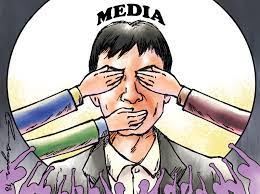
The collective impact of declining revenues, politically charged harassment, state pressure, and digital threats has created a shrinking space for independent journalism.
Key concerns include:
- Widespread layoffs
- Newsroom downsizing
- Digital platforms collapsing
- Senior journalists leaving the profession
- Young reporters struggling to find stable work
- Growing fear and self-censorship
Pakistan’s media is being squeezed from all directions—technological, political, and economic.
Recommendations and the Way Forward
1. Reform Cybercrime Legislation
A transparent, inclusive review of PECA and NCCIA is necessary to prevent abuse and protect journalists from digital threats.
2. Develop Sustainable Media Revenue Models
To reduce dependence on government advertising, media houses must explore:
- Subscription models
- Membership-based journalism
- Philanthropic support
- Transparent digital monetisation
3. Reduce Polarisation and Protect Journalists from Harassment
Political leaders, parties, and the public must actively discourage harassment—whether online or in person.
4. Strengthen Civil Society and Media Rights Organisations
Groups such as RMNP must continue monitoring layoffs, intimidation, and policy misuse, providing independent documentation and advocacy.
Conclusion
Pakistan’s media is at a decisive turning point. Deepfake attacks, harassment, political toxicity, and financial collapse threaten to dismantle the country’s already fragile information ecosystem.
Unless urgent reforms and protections are introduced, independent journalism may face irreversible damage—leaving citizens without trustworthy information and weakening democratic accountability
RMNP Report